
How to stack firewood so it stays put and dries well
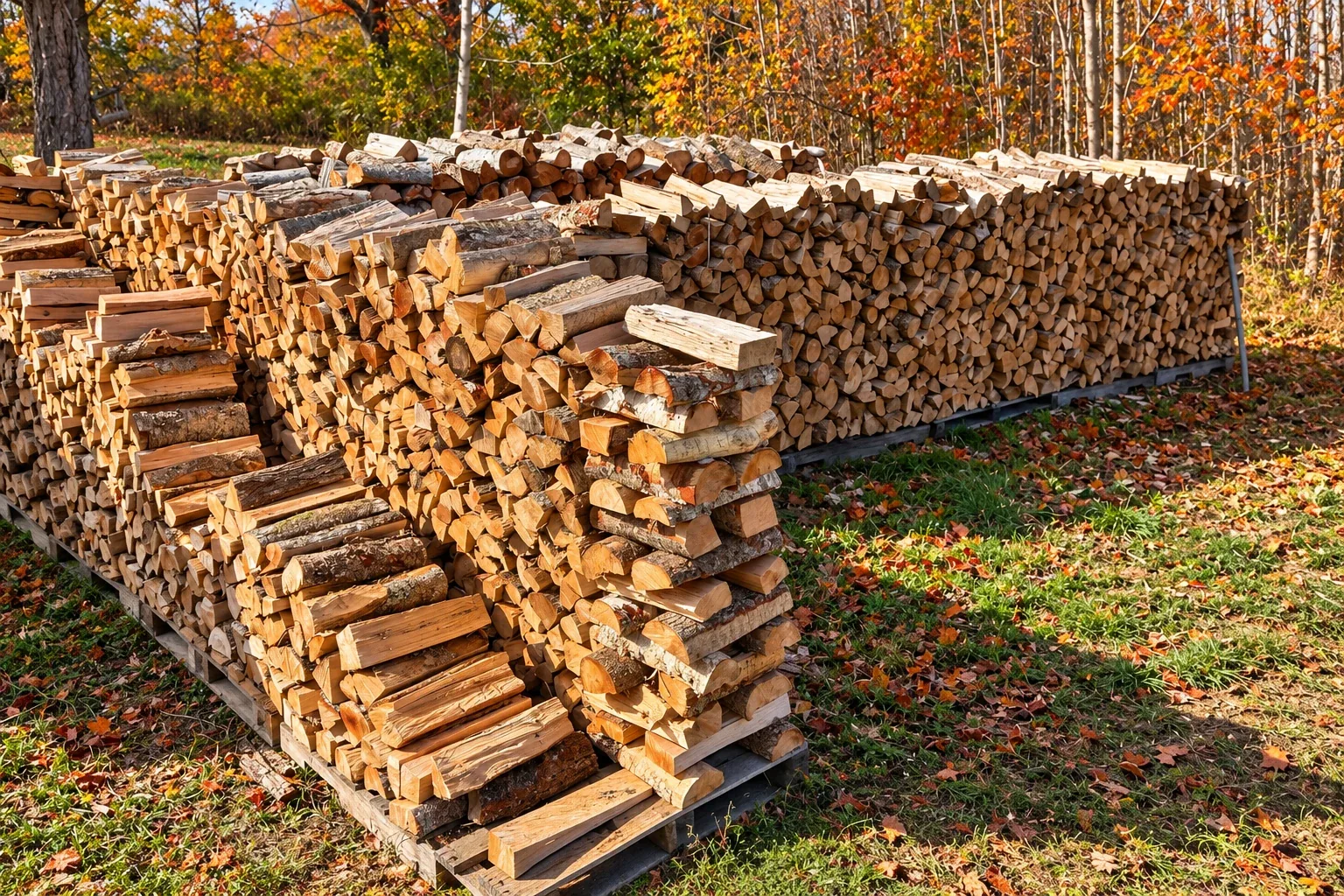
Stack split firewood on a firm, level base off the ground. Support both ends, keep the rows manageable, and cover the top while leaving the sides open to air. If you don’t have a rack, crisscrossed end columns are one option when the splits sit flat and steady.
In the Annapolis Valley, a spot that looks dry on delivery day can turn muddy after a stretch of rain or during a thaw. Pick the spot and set up the base before the truck arrives. If you’re working out how many rows you need, start with our firewood cord calculator.
1. Pick a firm spot with room for air
Choose level, well-drained ground with enough room to walk alongside the stack and reach it in winter. A spot exposed to some wind is better for drying than a damp, closed-in corner. Plan for a single row one log deep where space allows, or leave room between separate rows so air can move around them.
Use a sturdy rack or sound supports that keep the bottom row off the ground. Check that the base doesn’t rock and that all supports bear evenly. Avoid soft spots, slopes, and makeshift shims that can settle or shift under the weight.
2. Build a straight first row
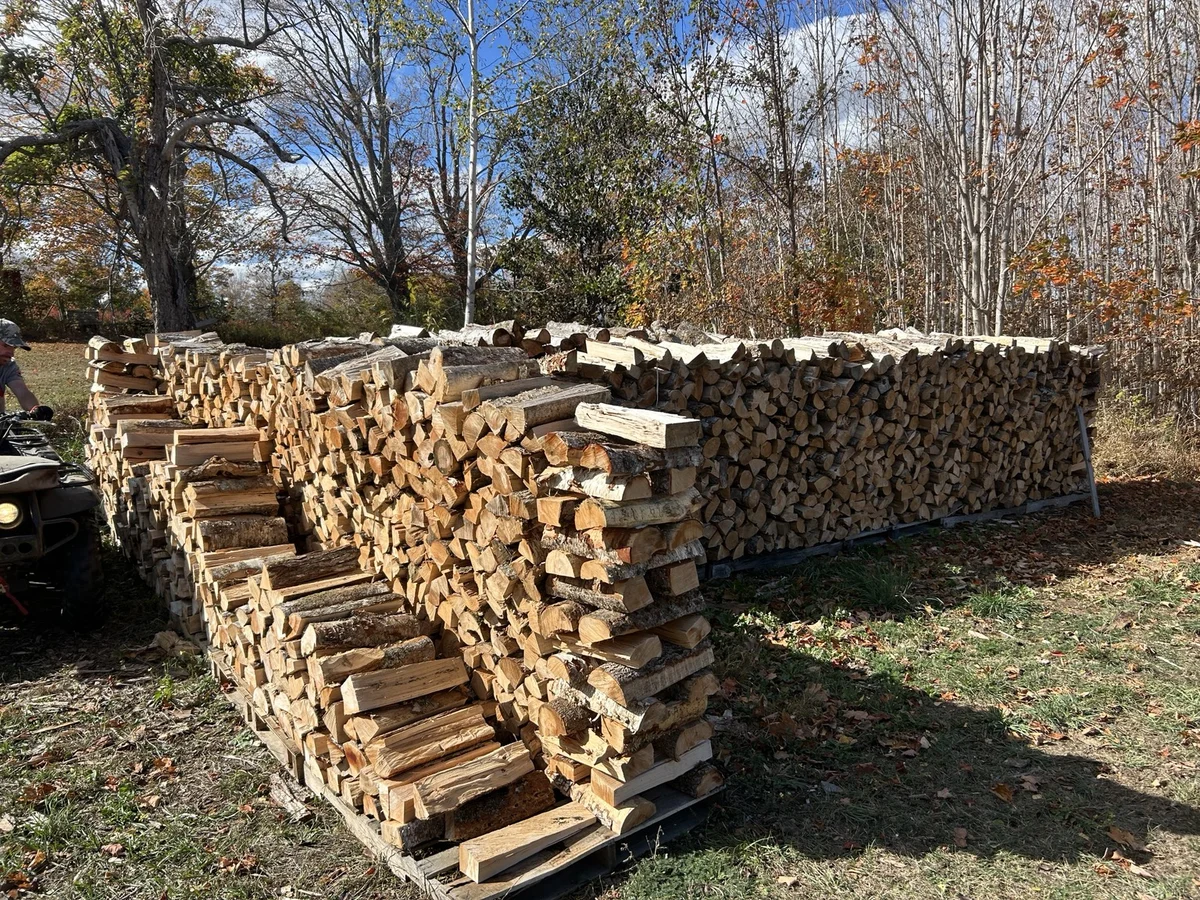
Set the larger, flatter splits aside for the base and end columns. Lay the first row with the cut ends facing out and check it from both ends before building higher. Place each piece so it sits securely. If a rounded piece rolls or rocks, turn it or use a different split.
As you add layers, step back every few courses. The face should stay upright with no bulge and no pieces hanging out. A few shorter rows are easier to stack and use than one tall wall. If you’re using a rack, follow its height and load limits.
3. Support the ends with a rack or crisscrossed splits
Without solid ends, the pieces in the row can work their way out. A purpose-built rack with end supports is a good choice when your wood is irregular or you can’t make a steady end column.
- Start with flat splits. At each end, place a pair of sturdy, similarly sized splits side by side on the level base.
- Turn the next layer a quarter turn. Set the next pair across the first, then alternate directions as you build. Pick pieces that sit flat without rocking.
- Build the row and both ends together. Keep the columns upright and check them as you go. If a layer won’t sit firmly, take it down and swap the pieces. Use a rack if the splits won’t make a steady column.
4. Cover the top and leave the sides open
A woodshed roof or a secured top cover keeps rain and snow off the stack. Leave the sides open so moisture can escape. If you use a tarp, secure it without wrapping the pile to the ground. The Nova Scotia guide to storing firewood recommends protecting the wood from rain and snow, keeping it off the ground, and allowing air to circulate.
What if the stack starts leaning?
Stop adding wood and keep children and pets away. Don’t push on the stack, pull pieces from the bottom, or stand where it could fall. If the lean is slight and you can safely reach it from outside the fall path, unload it from the top and rebuild after checking for a base that settled, a shifted end support, or rocking pieces. If the stack looks ready to fall or you can’t work clear of it, leave it alone and get help.
Need a hand stacking firewood near Annapolis Royal?
Valley Labour moves and stacks delivered firewood in Annapolis Royal, Granville Ferry and nearby communities. For a quote, send the approximate quantity, where it was dropped, and where you’d like it stacked. A photo of the access route helps if there are steps or a long carry.
See our Firewood Stacking service and 7-day stacking guarantee →
Sources and guidance (1)
What would help you next?
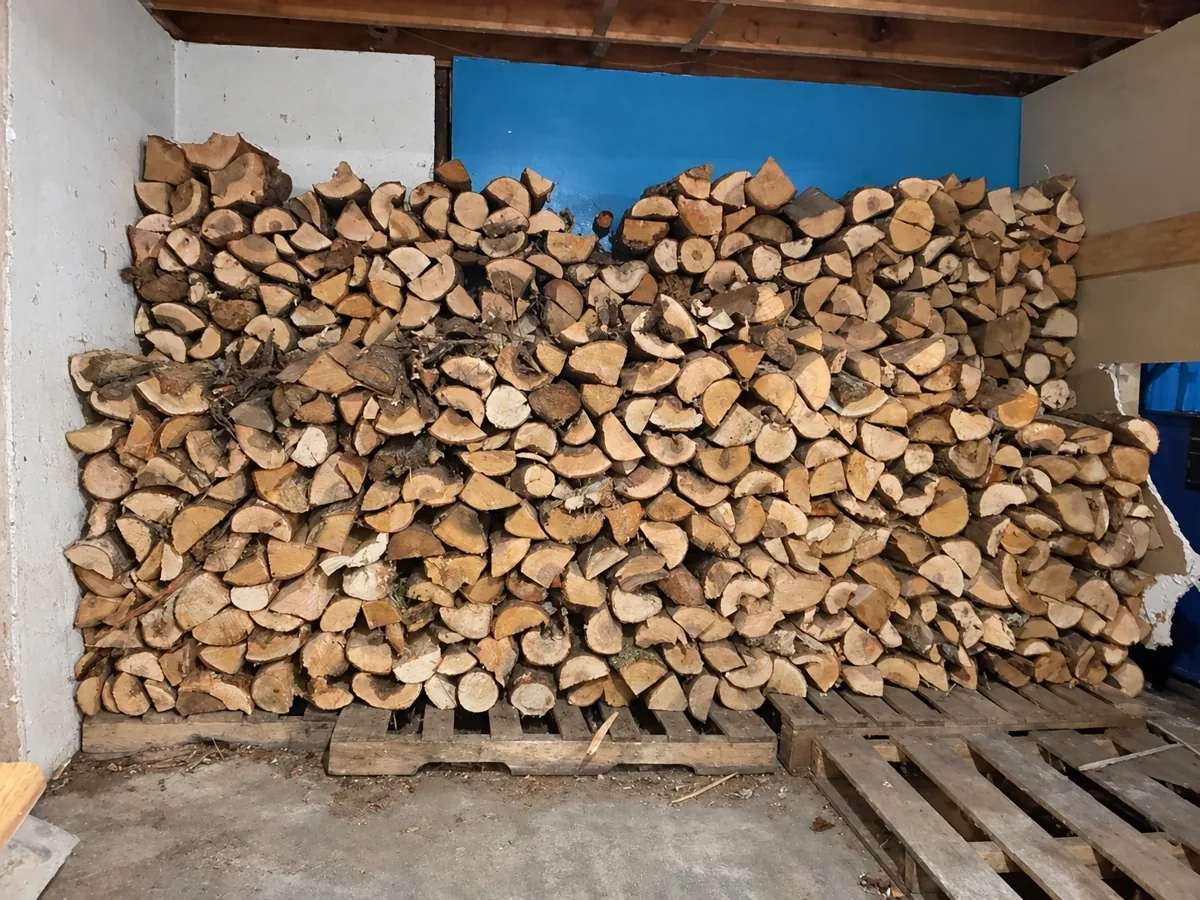
How much space does a cord of firewood take up?
Plan your storage space, measure separate rows and understand what a cord means—with diagrams and a simple firewood calculator.
Read the guide