
Ice dams vs. icicles: what to look for and when to call
Icicles alone don’t mean you have an ice dam. The telltale difference is a ridge of ice along the roof edge that can trap meltwater behind it. Look for that ridge from the ground, and pay attention to ice that keeps building up in the same spot or new water stains indoors.
What to do about ice on your roof
- A few small icicles, no ridge or signs of a leak: Keep an eye on the roof edge after the next thaw and refreeze. Watch from the ground, away from the overhang.
- Large icicles over a doorway or walkway: Keep people and pets out of the area, use another entrance if possible, and call a professional equipped to remove them safely.
- A thick ridge along the roof edge: Call a roofer who handles ice dams. If you see active dripping or new stains on a ceiling or exterior wall, call promptly. Tell them where you see the water and whether the ice has returned in the same spot.
Leave the ladder and hammer in the shed. Working under or on an icy roof can put you in the path of falling ice, and chipping at the ridge can damage shingles or gutters.
Before and after: roof-edge icicle removal
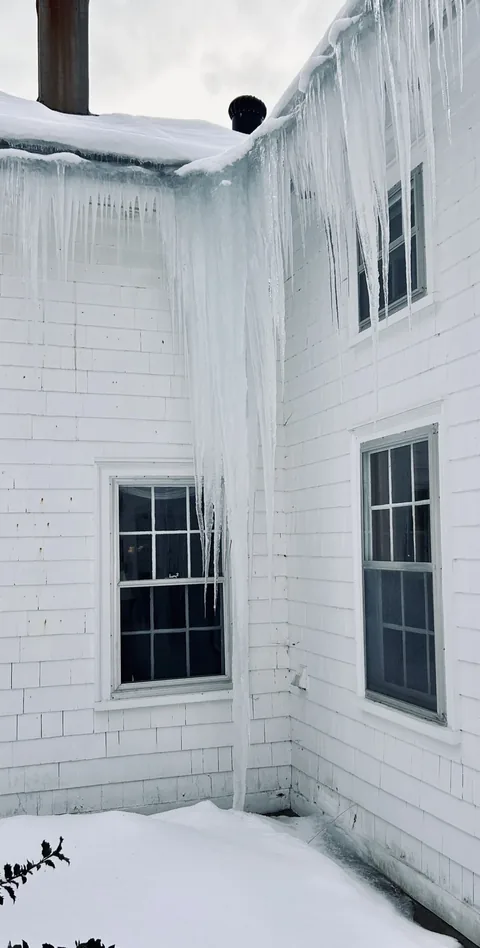
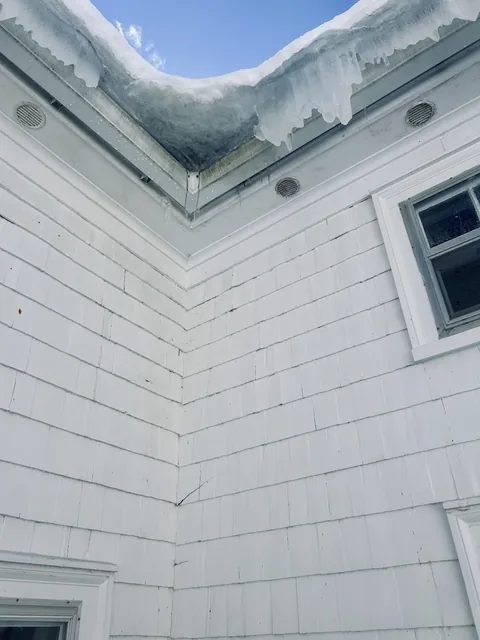
These Valley Labour job photos show the same corner from different angles. Removing hanging icicles addresses the falling ice; the photos don’t establish what caused the buildup.
How to prevent ice dams from coming back
When heat escaping from the house warms the upper roof, snow can melt, run down, and freeze again at the colder edge. If ice blocks the flow, water can back up under the shingles. If this happens repeatedly, ask an insulation or home energy professional to check for attic air leaks and gaps in insulation.
Before winter in the Annapolis Valley, clear leaves and debris so gutters and downspouts can drain. That’s useful maintenance, but gutter cleaning alone won’t fix heat loss through the roof. See when to check and clean your gutters, or get help with routine gutter cleaning around Annapolis Royal.
Sources and guidance (3)
What would help you next?
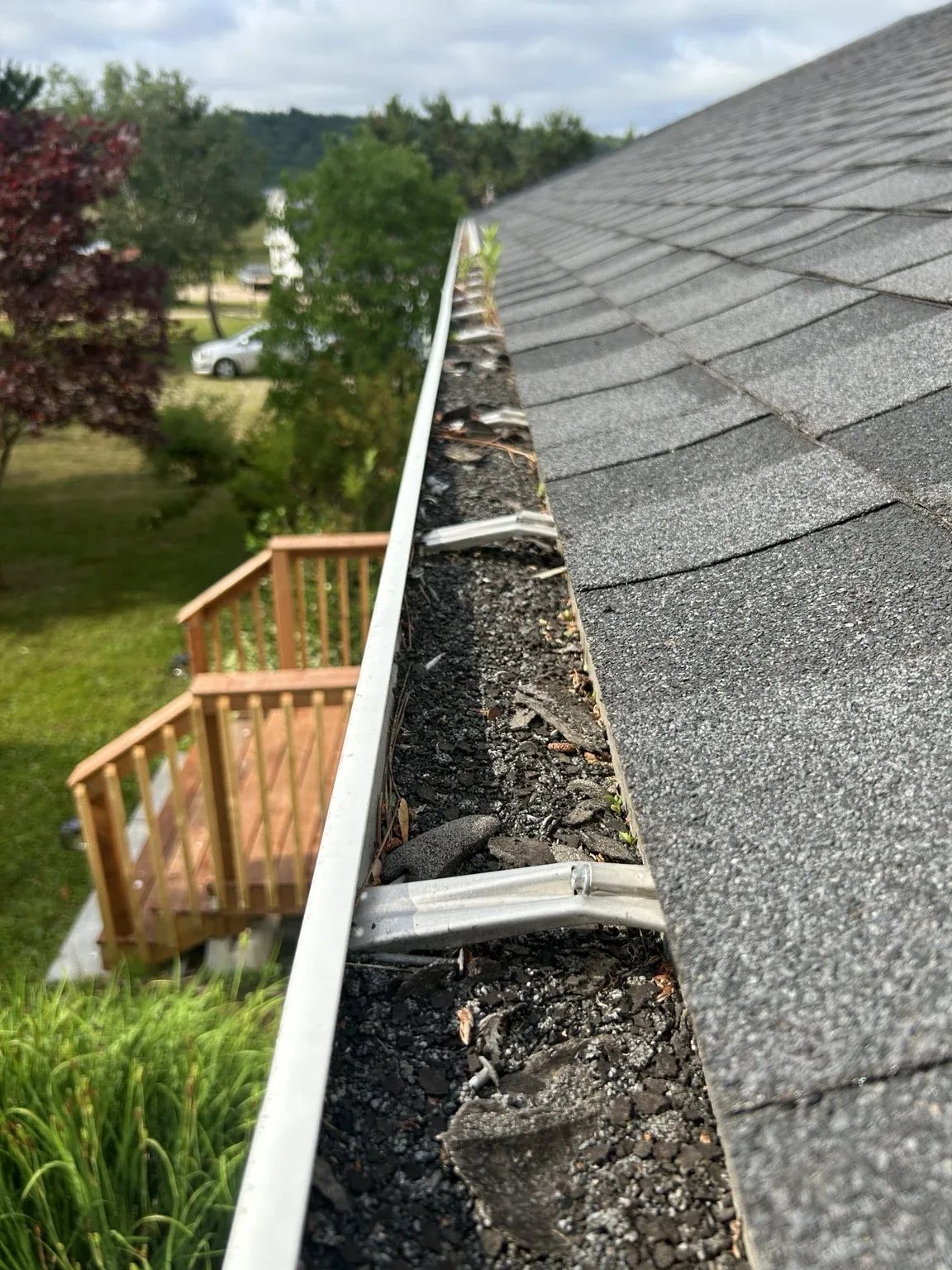
How often should you clean your gutters in Nova Scotia?
Build a practical spring-and-fall routine, spot drainage concerns from the ground and decide when your home needs another check.
Read the guide