
How to keep deer out of your garden in Nova Scotia: what actually helps
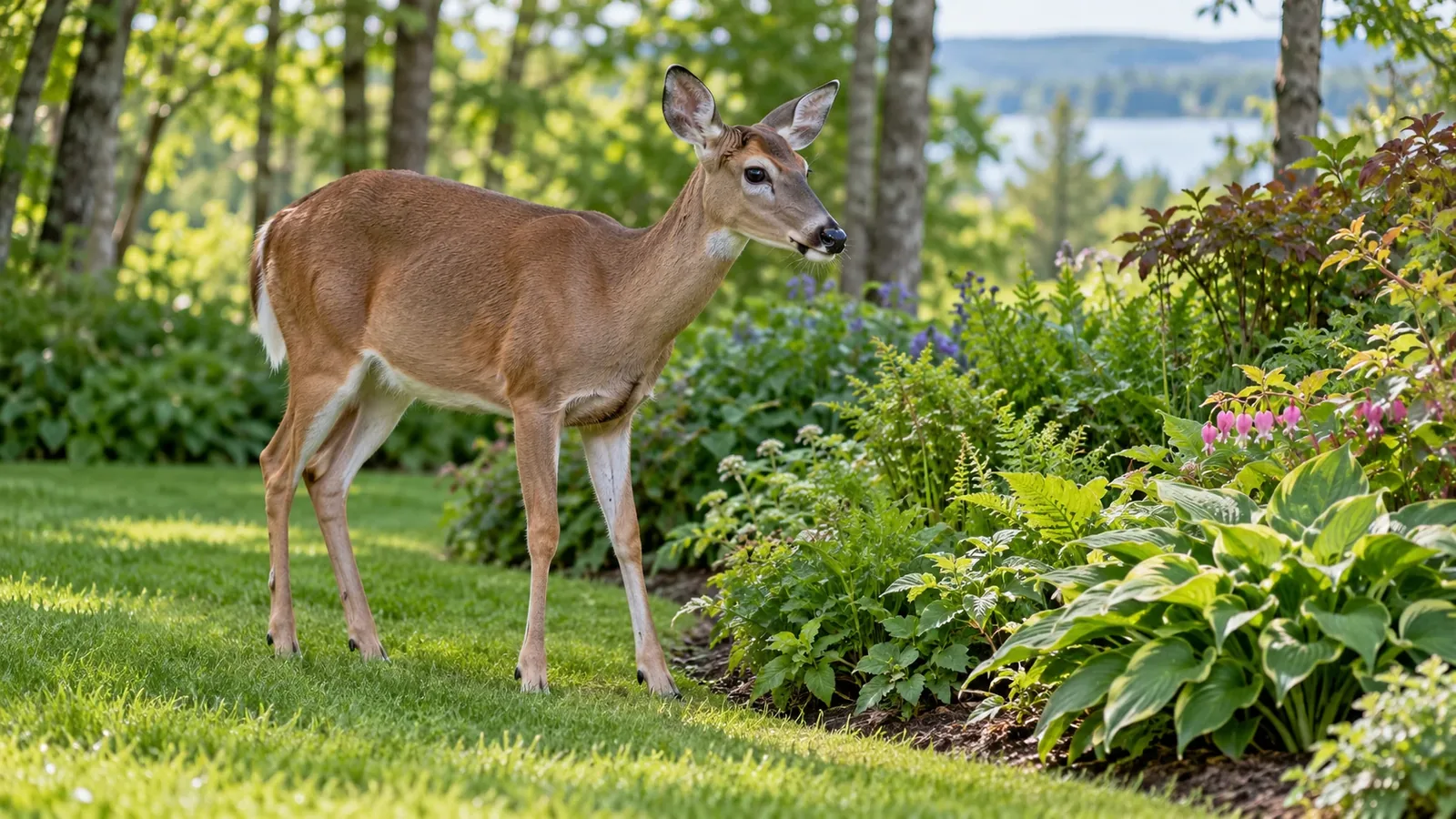
A well-designed physical barrier is the most dependable way to protect a garden from deer. Repellents and less-palatable plants can reduce damage, but neither guarantees it will stop. Protect your favourite plants first, choose replacements that suit the site, and adjust the plan to what deer actually browse in your yard.
If deer regularly visit your Annapolis Royal garden, replacing the same eaten plants each year gets frustrating. There is a more useful starting point than buying another “miracle” deterrent: decide what you want to protect, how much upkeep you can manage and where a barrier would be practical. This guide focuses on humane garden protection, not wildlife removal.
First, check what is eating the plants
Missing leaves alone do not identify the culprit. Deer tracks, droppings and direct sightings help. Browsed shoots often have torn, ragged ends rather than a neat cut; Nova Scotia Natural Resources describes these signs in its deer-damage guidance.
Take a few photos and record which plants are damaged and when. That small record is useful when choosing replacements or asking for help. A plant that has survived in a neighbour’s garden is worth investigating, but its success is not a guarantee for your property.
What works best: fencing and smaller protective enclosures
A low decorative border is not dependable deer exclusion. Provincial guidance describes a well-built woven-wire fence at least 2.4 m (8 ft) high, tight to the ground. That is a design reference, not a promise that any eight-foot fence will work: gaps, gates, terrain and construction matter.
For a small property, protecting one bed or a few valuable plants may be more manageable than enclosing the whole yard. Ask a suitable installer about an enclosure that prevents deer reaching through or over it. Check Town requirements before committing to a tall fence, particularly on a heritage property. Electric fencing needs a separate suitability and safety assessment; it is not our default suggestion for a residential front garden.
Sketch the area first. Include gates, the path you use with tools and enough room to maintain the plants. A protective setup that makes everyday gardening awkward is less likely to stay in use.
Do deer repellents work?
Repellents may reduce browsing, but need ongoing attention. Nova Scotia’s deer guidance describes reduced effectiveness after rain and when food is scarce. Read older publications for these general limitations; use current Canadian labels for product selection and directions.
Before choosing a spray, ask yourself whether regular checking and reapplication are realistic. Follow the product’s timing rather than a generic online recipe. A product suitable for ornamental shrubs is not automatically suitable for vegetables or edible fruit.
Use a product registered in Canada and labelled for the intended pest, plants and use. Read all directions, including weather, re-entry and edible-crop restrictions. Health Canada explains how to choose and use pesticides safely. A recommendation from another country does not establish Canadian approval, and “natural” does not replace label directions.
Which deer-resistant plants are worth considering?
Deer-resistant means less likely to be browsed, not deer-proof. Master Gardeners of British Columbia warns that hunger and young growth can change browsing. A planting list is a starting point, not a guarantee for an Annapolis Valley yard.
Canadale’s Ontario planting list includes catmint, lavender, peony and bleeding heart as less-palatable candidates. The shortlist below gives questions to discuss with a local nursery. It does not claim these plants form a protective barrier or suit every Nova Scotia garden.
| Candidate | Discuss with your local nursery |
|---|---|
| Catmint Nepeta | Choose the species or cultivar for your light, drainage and available space; check whether it spreads or self-seeds. |
| Lavender Lavandula | Confirm winter hardiness and drainage for your site before choosing a variety. |
| Herbaceous peony Paeonia, herbaceous types | Ask about the right position, mature spread and whether the flower type needs support. |
| Old-fashioned bleeding heart Lamprocapnos spectabilis | Discuss a suitable shaded position and seasonal appearance; check plant safety where children or pets may eat plants. |
Match the exact cultivar to sunlight, drainage, mature size and your exposed or sheltered location. Canadian and USDA hardiness numbers are different systems; do not treat the same number as interchangeable. Trial a small planting before replacing a whole bed, and protect plants you cannot afford to lose.
Do soap and scare devices work?
Some deterrents may reduce visits temporarily, but results are inconsistent. Nova Scotia’s guidance explains that deer become accustomed to stationary scare devices. A moving or surprising deterrent may help for a time; it should not be the only protection for valuable plants.
Hanging soap and other homemade remedies are not a dependable garden-wide plan. Master Gardeners of British Columbia advises caution with home remedies because effectiveness and plant safety are not assured. Put your effort into protecting the plants you most want to keep rather than collecting gadgets.
Also avoid drawing deer in. Nova Scotia advises that spilled bird feed attracts deer and other wildlife. Keep that area clean rather than offering food elsewhere in the yard to distract them.
A manageable plan for your garden
- Choose your priorities. List the bed or plants you most want to keep.
- Protect the vulnerable area. Compare a suitable enclosure with the ongoing work of repellents.
- Replace gradually. Choose less-palatable plants that fit the site instead of repeatedly replacing losses with the same unprotected plants.
- Check the result. Record fresh damage, inspect barriers and follow any product’s reapplication directions.
You do not need to redesign everything at once. Start with one area you can maintain comfortably, then use the results to decide what to do next.
Garden help around Annapolis Royal
Valley Labour can discuss garden-bed care and suitable planting work around Annapolis Royal. Share photos, the plants being damaged and what you want to keep. We will review the work and availability before discussing an estimate. Plant selection can reduce risk; we do not promise a deer-proof garden or offer wildlife removal.
Sources and guidance (5)
What would help you next?
Which perennials should you cut back in fall—and which should you leave?
Know what to cut, what to leave and where to put the pruners—with a quick reference for 15 familiar perennials and clear cutting diagrams.
Read the guide
Should you rake leaves or leave them? A Nova Scotia fall cleanup guide
Protect the lawn, leave room for wildlife and decide which fall cleanup tasks matter most at your property.
Read the guide