What goes in Nova Scotia’s blue recycling bags?
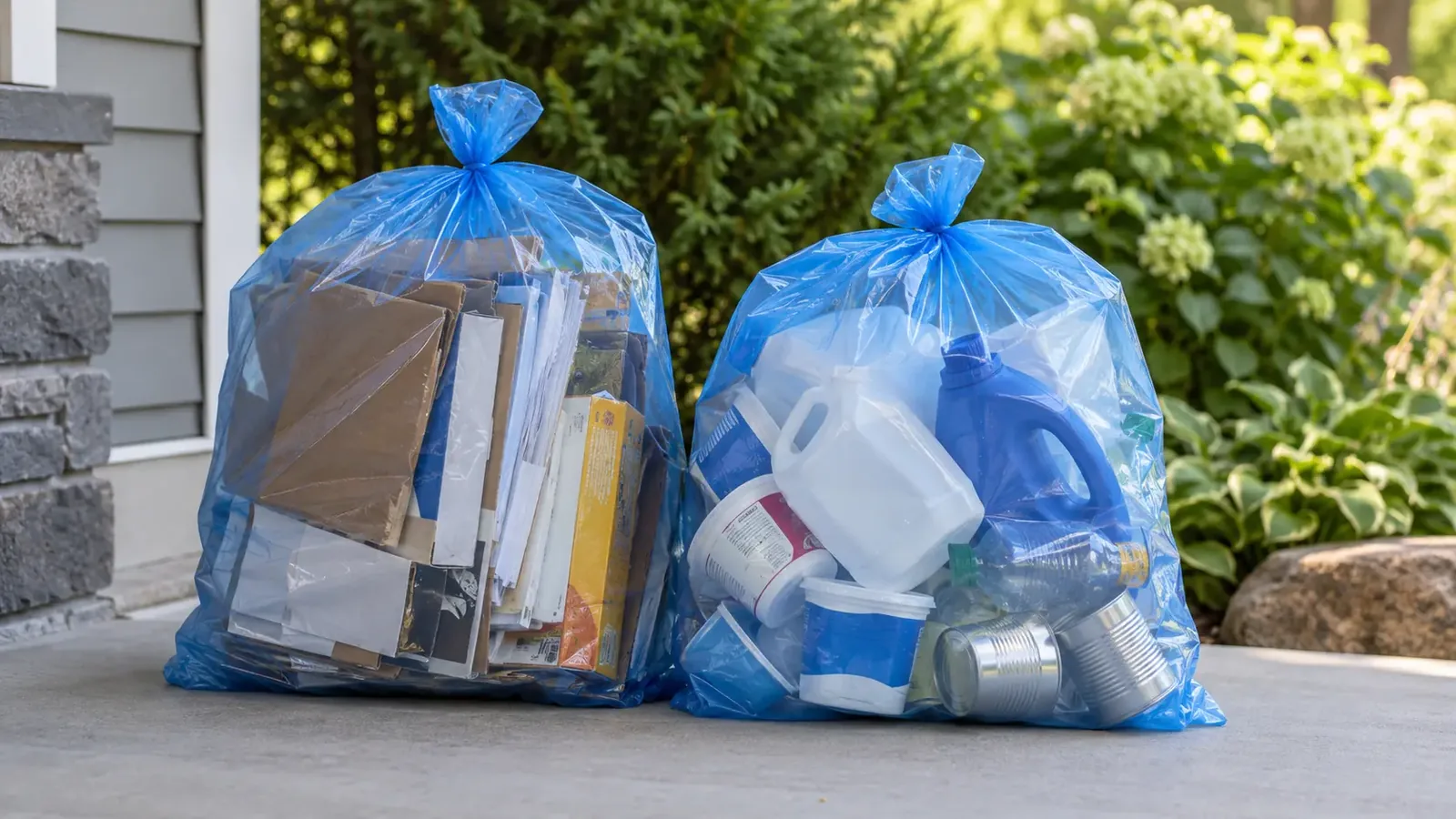
Nova Scotia uses separate blue-bag streams for paper/fibre and containers. Follow the item’s listing and preparation instructions, rather than sorting by appearance alone.
Cover image created with AI to illustrate separate paper and container recycling.
Use the official material list first
The Official recycling material list (PDF) is the best starting point for a particular package. This article explains how to read it without reproducing a list that could change. Keep the main household sorting guide nearby if you are setting up bins for the first time.
Work through one package at a time: identify it, empty it, check the listed stream and follow its preparation note. If your item is not a clear match, use your local item lookup rather than deciding from a recycling symbol alone.
Paper and containers: a few useful examples
| Stream | Examples in the provincial list | Preparation notes |
|---|---|---|
| Paper/fibre | Newspapers, envelopes, cereal boxes | Keep the paper stream separate. The list has special instructions for shredded paper. |
| Plastic containers | Yogurt tubs, shampoo bottles, toothpaste tubes | Empty; listed plastic containers keep lids and caps on. |
| Cartons | Milk and soup cartons | Rinse and dry; caps stay on. |
| Glass containers | Food jars and bottles | Empty; lids and caps off. |
| Beverage cups | Hot and cold drink cups | The list places these with containers: rinse, dry and remove lids. |
These examples come from Circular Materials’ detailed list. They are not a complete inventory. Use the instructions for your specific package, particularly for a lid made of a different material.
Why cardboard and specialty packaging need a local check
Do not assume every collection instruction is identical to every drop-off instruction. The provincial guide lists flexible plastics, foam packaging and aerosol containers under participating drop-off locations. Valley Waste’s sorting page says the listed materials can also enter its curbside streams as directed. Check Valley Waste’s current instructions or your own collector before setting these out.
There is also a difference in published cardboard bundle dimensions between the provincial material sheet and Valley Waste’s local guide. Confirm your collector’s current requirements rather than relying on a dimension copied into a blog post. Flattening and setting cardboard aside while you check is easier than rebuilding an oversized bundle at the curb.
A simple way to handle confusing packaging
- Read the package name in the official guide, not just its colour or texture.
- Separate the contents from the package. Do not put a half-full food container into a recycling bag.
- Check each component when the package has a lid, liner, sleeve or absorbent pad.
- If an item needs a depot, add it to a labelled trip list instead of hiding it inside another container.
When instructions appear to conflict, ask your collector about the exact item and describe how it is being set out. A photograph can help explain a mixed-material package. Keep the answer with your household sorting notes so you do not need to repeat the same search every week.
Separate refundables and items outside the packaging system
If you want the deposit refund on eligible beverage containers, use Divert NS’s return instructions and a participating depot. Do not assume milk cartons and refundable drink cartons have the same refund status.
Keep electronics and batteries on their separate routes. A blue bag is not a general-purpose collection bag for everything you hope to recycle. See batteries, electronics and special items for the program links.
If you are getting ready for collection now, return to the household sorting checklist and check your local calendar before setting materials out.