How to sort recycling, garbage and compost in Nova Scotia
Keep paper recycling, container recycling, compost and garbage separate, and set aside items that need a return, donation or special drop-off. Use your address to check collection instructions before putting anything out.
Sorting works best before a bag fills up. A few labelled containers where you unpack groceries or prepare food can save you from reopening a mixed bag on collection morning. This guide explains the household routine first, then points you to detailed help for awkward items.
The recycling guidance below is for Nova Scotia. Green-cart examples are labelled for the Valley Waste area around Annapolis Royal; check your own municipality if you live elsewhere. The household setup suggestions are practical advice from Valley Labour, while linked program sources establish the disposal rules.
Start here: a quick household sorting table
| Separate stream | What to do | Detailed help |
|---|---|---|
| Paper recycling | Clean, dry paper such as newspapers and cereal boxes; separate from containers. | Blue-bag guide |
| Container recycling | Accepted tubs, bottles and milk cartons; empty and follow the material’s preparation note. | Containers and tricky packaging |
| Compost | Unpackaged food scraps and accepted organics. For Valley Waste, this includes coffee filters and tea bags. | Green-cart guide |
| Garbage | Locally listed residual waste. Valley Waste examples include wipes and diapers; batteries and chemicals need separate routes. | Check an item locally |
| Returns and special drop-off | Keep refundable containers, electronics and other program items separate from routine bags. | Special-item guide |
| Usable belongings | Ask a recipient before setting aside a donation load. | Donation and reuse guide |
Table references: provincial recycling list and Valley Waste’s local sorting guide. The examples are a starting point, not a complete item list.
Check your address, not just the nearest town
Open Divert NS: find your local sorting guide and choose the relevant municipality or waste authority. Confirm the collection calendar, bag or cart requirements and any private-road instructions. Do not assume everything is collected weekly: Valley Waste’s current guide describes a two-week cycle for garbage, recycling and compost.
For Annapolis Royal and nearby Valley Waste customers, Valley Waste’s guide and Recycle Coach lookup provide address-based collection information and item searches. Residents served elsewhere, including the Digby area, should select their own authority through Divert NS rather than borrow Valley Waste’s limits.
Save that official page on your phone. When an unfamiliar package turns up, search its actual name and use—not just the material you think it resembles. If it is still unclear, contact the authority before collection day.
Use the current recycling list
Nova Scotia’s enhanced recycling program began on December 1, 2025. It retains separate blue-bag streams for paper and containers, with a standardized accepted-material list. Older instructions may miss newly accepted packaging. Check the current provincial program.
A recyclable package does not automatically belong with paper, and an item made of plastic is not automatically accepted packaging. Use the named examples and preparation notes in the official list. Our blue-bag article explains that decision in more detail.
Special packaging can need extra checking. The provincial list identifies some materials for participating drop-off sites, while Valley Waste also provides local curbside guidance for those materials. Follow the current instructions for your address instead of applying a general internet rule.
Set up a sorting station that is easy to maintain
Choose a small area that is comfortable to reach. A useful setup is a paper bag or bin, a container-recycling holder, a kitchen organics container and a garbage container. Keep a separate place for refundable drinks containers. You do not need an expensive matching set; clear labels matter more.
Keep special items in their own appropriate storage, following their program’s safety instructions. Do not mix batteries or leaking products into the household sorting station. If storage is limited, keep a short list of items needing a separate trip so they do not disappear into an ordinary garbage bag.
- Label by destination, not only by colour, so guests can follow the system.
- Keep the local sorting page handy for uncertain items.
- Agree who empties the kitchen organics container and checks the collection calendar.
- Use one small, dry “check first” area for safe, ordinary packaging you need to look up.
Prepare materials before collection day
Empty packaging before sorting it. Separate food from its wrapper; the food and package can have different destinations. Keep paper away from wet scraps. Read the material-specific instructions for lids, cartons and unusual packaging instead of treating everything the same way.
The night before a scheduled collection, check current set-out requirements and service notices, tie bags as directed and make sure containers are accessible. If a bag or cart is rejected, read the notice and ask what needs correcting rather than adding the same unsorted material to the next collection.
For local compost preparation, use our green-cart guide. For a full car or trailer load, use the facility-trip checklist before loading.
Keep reusable and special items out of routine bags
Refundable beverage containers have a separate return program through participating Enviro-Depots. Check eligibility through Divert NS; a container being recyclable does not necessarily mean it carries a refund.
Batteries, electronics, leftover paint and household chemicals require their own decisions. Our special-item article links to the relevant programs, including advice for damaged batteries. A weekly household guide cannot safely replace those instructions.
For furniture, tools and household goods, try donation or reuse where the condition and recipient make that practical. Confirm acceptance before taking items to a store, charity or depot.
Aim for less waste, not a fuller recycling bag
A workable goal is to make the correct route easy. Do not add an uncertain item to recycling just to avoid using the garbage stream. Look it up, reduce unnecessary packaging where practical and make a habit of using what you already have.
For Annapolis Royal homeowners planning a larger cleanout, Valley Labour can discuss junk removal and hauling. Tell us what needs removing and any special materials before booking. Our ordinary cleanout service does not include hazardous or contaminated waste.
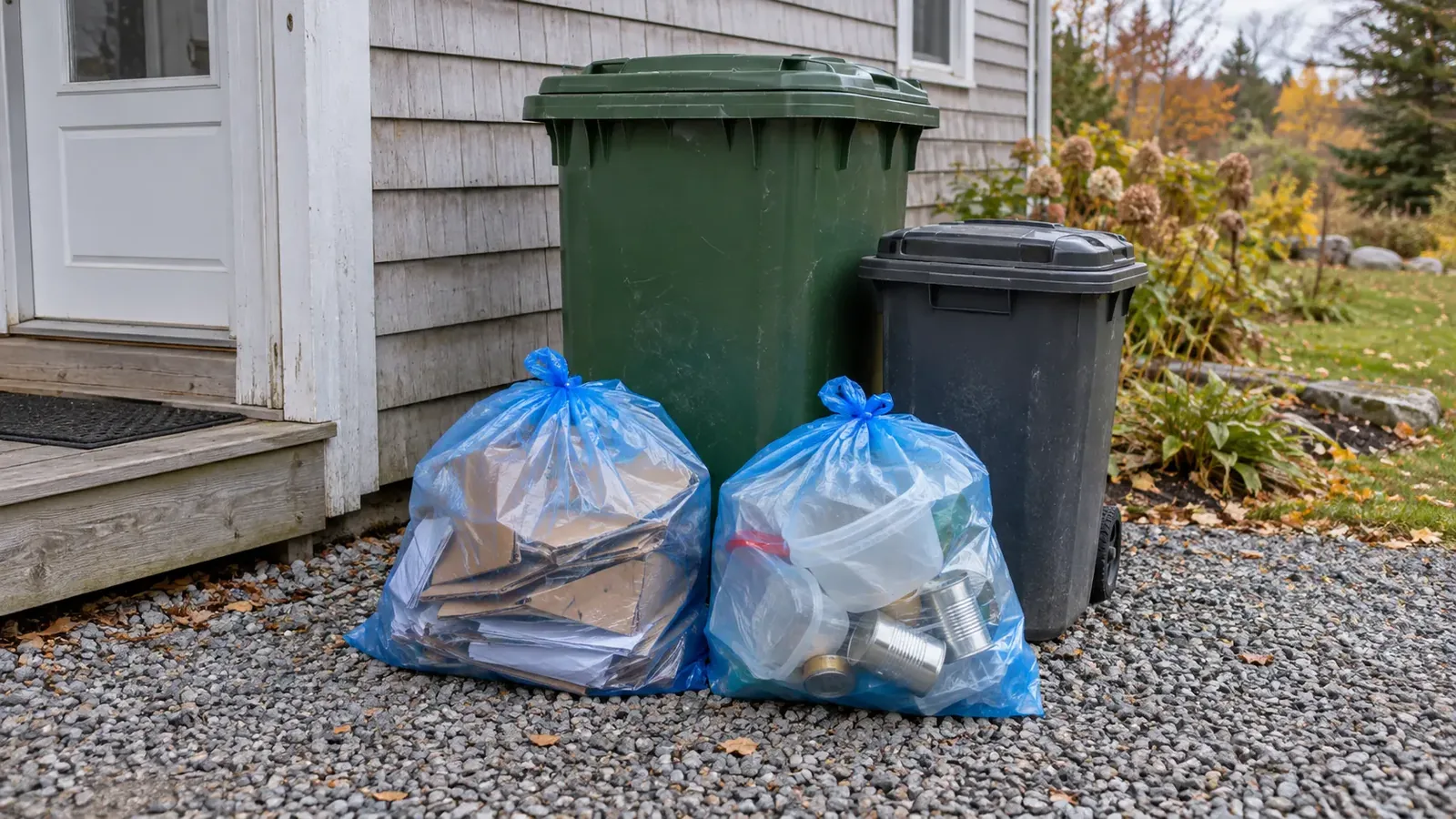
Cover image created with AI to illustrate a household sorting setup.
Sources and guidance (5)
What would help you next?
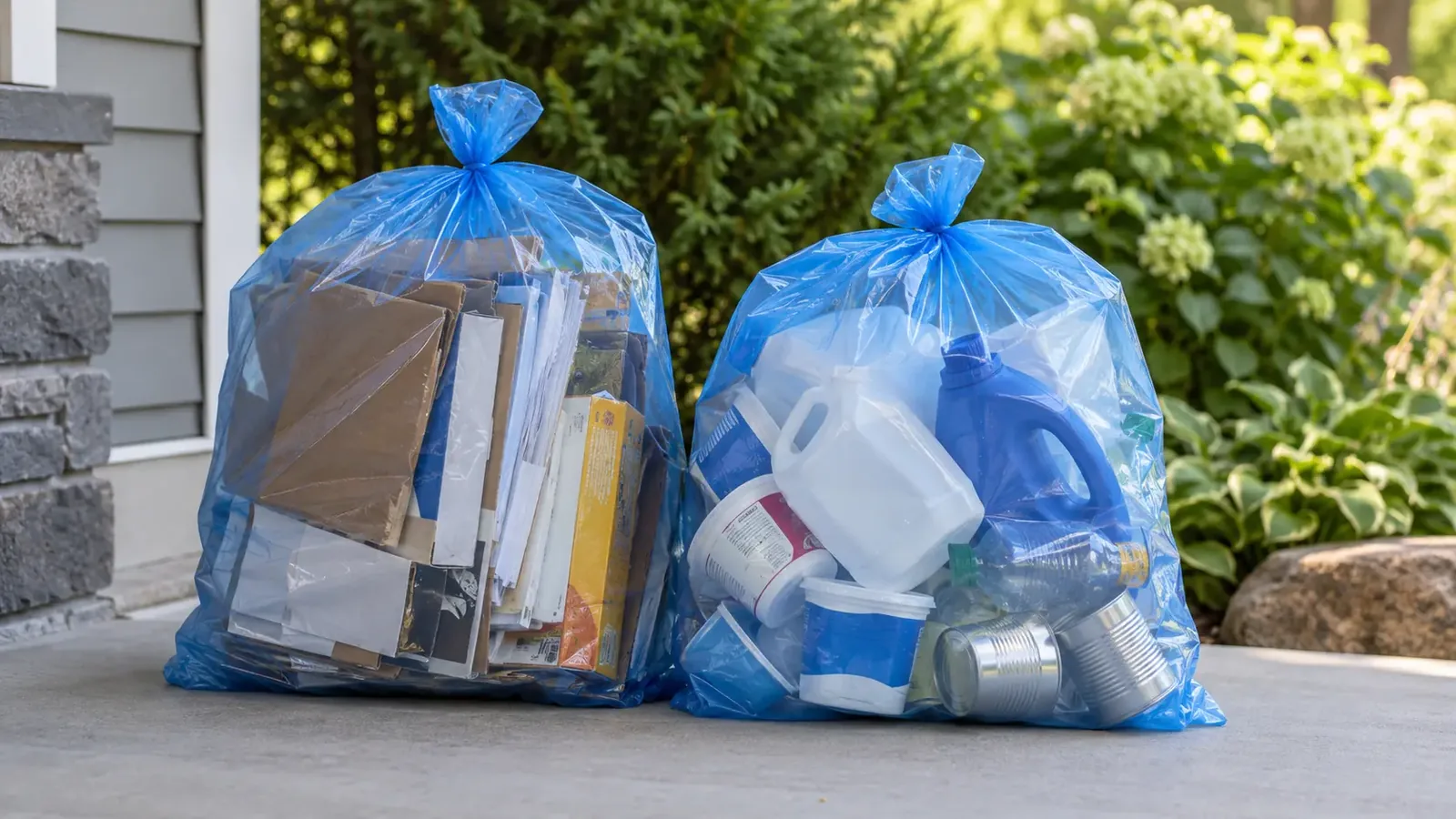
What goes in Nova Scotia’s blue recycling bags?
Separate paper from containers and check the details that make a package ready for recycling.
Read the guideWhat goes in the green cart? An Annapolis Valley guide
A practical kitchen routine, approved liners and the local compost rules to check before collection.
Read the guide