
What goes in the green cart? An Annapolis Valley guide
For Valley Waste customers, keep accepted organics separate from packaging and use approved cart liners only. Green-cart rules are local: check your municipality before applying these examples elsewhere in Nova Scotia.
What belongs in the Valley Waste green cart?
Valley Waste’s current sorting guide lists food scraps, coffee filters, tea bags and several garden materials in its organics stream. It also identifies materials to keep out, including diapers, wipes, dog waste, coffee pods and ashes. Use that local list for the exact item; “natural-looking” or “paper-like” is not a reliable test.
This matters for everyday kitchen sorting. A leftover meal and its takeout package are separate items. Remove the food, then check the package in the recycling guide or local item lookup. Do not put the whole packaged item into compost just because its contents are food.
Choose a liner the local system accepts
Valley Waste allows paper or boxboard for containing compost. Its green-cart guidance also describes certified compostable film bags with specified certification symbols. Ordinary plastic bags are not a substitute. Check those symbols against the official page before buying liners; a vague “green” or “biodegradable” claim is not the local approval instruction.
A simple option is to wrap wet scraps in suitable paper or use an empty boxboard container. Keep the official guidance handy if anyone else in the household shops for liners. Buying the right liner once is less frustrating than removing unsuitable bags from a full cart.
Make the kitchen routine manageable
Keep a small organics container close to food preparation and empty it regularly. Choose a size that is comfortable for you to carry, rather than waiting until a large container is unpleasantly heavy. Make sure everyone knows that packaging needs a separate check.
Valley Waste suggests wrapping scraps, managing moisture and cleaning the cart to help with odours. It also suggests freezing particularly smelly food scraps until collection. Keep the lid able to close and follow its instructions for putting the cart out. The detailed cart-care page is the reference for local care and collection requirements.
- Check the small kitchen container when you tidy after a meal.
- Keep suitable wrapping or liners beside it.
- Put a reminder in your calendar for the correct collection cycle.
- Look up unusual materials before adding them to the cart.
Garden material and pet waste need specific answers
Do not use advice about backyard compost as proof that something belongs in a municipal cart. Processing systems and collection requirements are different questions. Yard waste quantities, branches and animal-related materials deserve a local lookup.
For example, Valley Waste distinguishes dog waste from cat litter in its published guide. That is a reason to check the named item, not to apply one pet-waste instruction across the province. If the exact litter or packaging is uncertain, ask your waste authority.
For garden work producing more material than your regular collection can take, check town-run yard-waste sites as well as management centres. Our leaf-cleanup guide covers the Annapolis Royal and Middleton options, including eligibility restrictions. Use the facility-trip guide before arranging a larger load.
Reducing food waste comes before composting it
Divert NS encourages preventing food waste as well as composting unavoidable scraps. A shopping list, a visible leftovers shelf and using food already in the fridge are practical places to start.
The goal is a routine you can sustain. Separate organics as you go, check unfamiliar items and use the local guide when the answer is uncertain. Return to the full household sorting guide for the other waste streams.
Sources and guidance (4)
What would help you next?
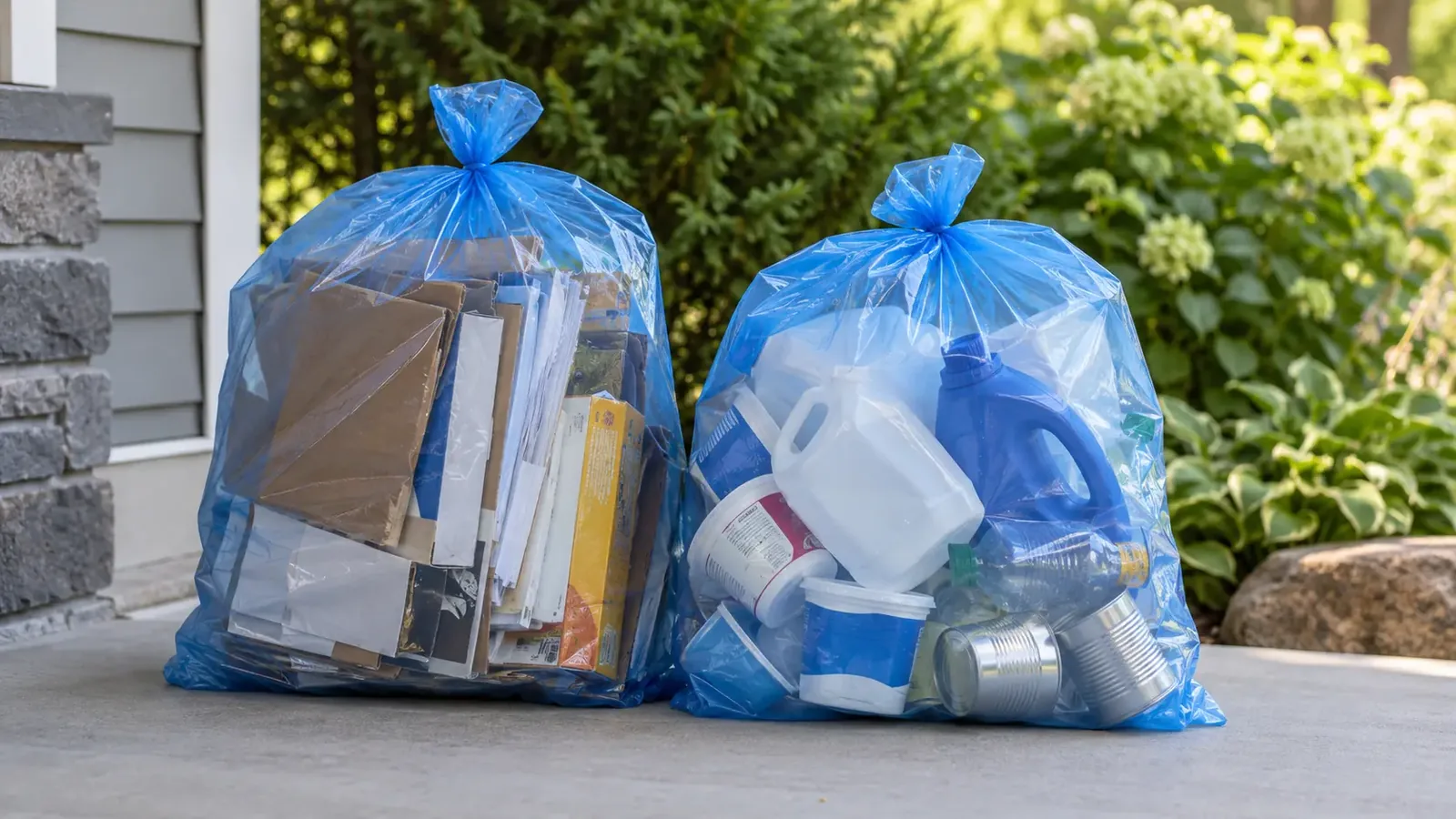
What goes in Nova Scotia’s blue recycling bags?
Separate paper from containers and check the details that make a package ready for recycling.
Read the guideHow to prepare for a waste-facility trip in the Annapolis Valley
Sort before loading, check the right destination and arrive ready to unload.
Read the guide